
You did the sensible thing. You signed them up for the coding camp. You bought the robot kit with the little blue motor. You said the line every parent said for fifteen years: there will always be jobs in computers.
It was good advice. It was the safest thing you could tell a kid in 2012. It has also expired, and almost nobody has said so out loud.
The machine learned to code. The jobs it cannot touch are the ones we spent a decade steering kids away from: the ones done with hands, in crawlspaces and attics, under hoods and inside breaker panels.
The Promise
For a while, "learn to code" was less a piece of advice than a national ritual. Code.org's Hour of Code turned an hour of drag-and-drop programming into something every school did once a year. Coding camps, coding franchises and coding toys filled the gap between the school bell and dinner. The pitch was simple and, at the time, true: software ate the world, so the people who wrote software would always eat.
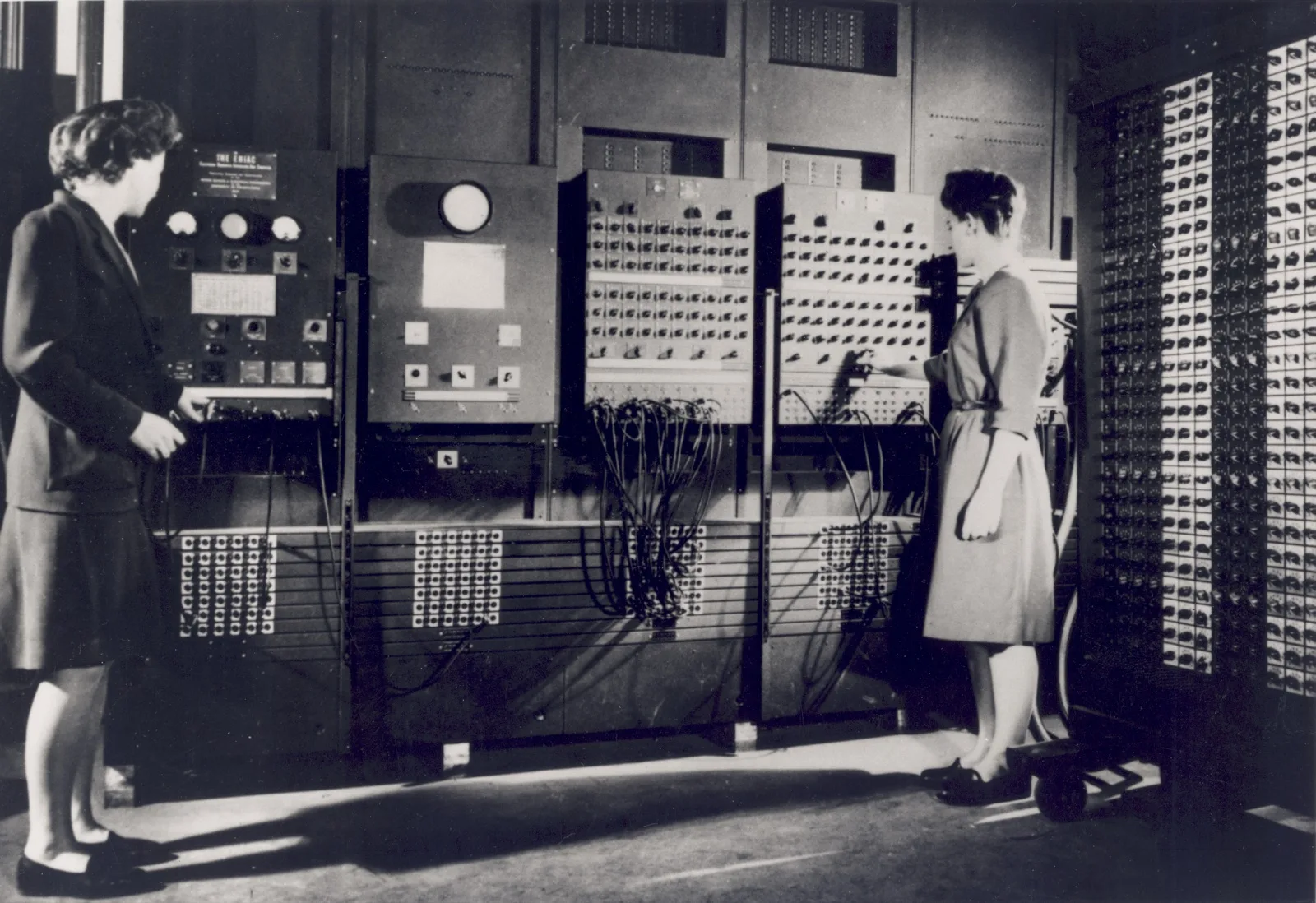
Programmers Betty Jennings and Frances Bilas preparing ENIAC, one of the first electronic computers, in 1946. Photo: U.S. Army, public domain.
The tell that the story has changed is quiet but hard to miss. In October 2025 Code.org renamed the Hour of Code. It is now the Hour of AI.
In short
"Learn to code" was the right advice for a decade. The organisation that made it a school ritual has already moved on to AI.
Then the Machine Learned to Code
Start with the company that has more programmers than most countries have software firms. In October 2024, Google's chief executive said more than a quarter of all new code at Google was generated by AI. A year later the company's chief financial officer put it at nearly half. In April 2026 the chief executive said 75%, "AI-generated and approved by engineers."
A quarter, to half, to three quarters, in eighteen months. Engineers still review it. They are just not the ones typing it.
The government has noticed. The Bureau of Labor Statistics now projects that computer programmer jobs will shrink by 7% between 2025 and 2035, while employment overall grows 3.5%. It names the reason plainly: companies are using AI to automate repetitive programming tasks.
Job postings tell the same story with less polite language. Indeed tracks postings against a February 2020 baseline of 100. Software development postings hit 233.8 in February 2022, the peak of the hiring frenzy. By May 2025 they had fallen to 61.1. In early November 2026 they stood at 81.4, still below where they were before the pandemic, while postings for all jobs sat at 104.6.
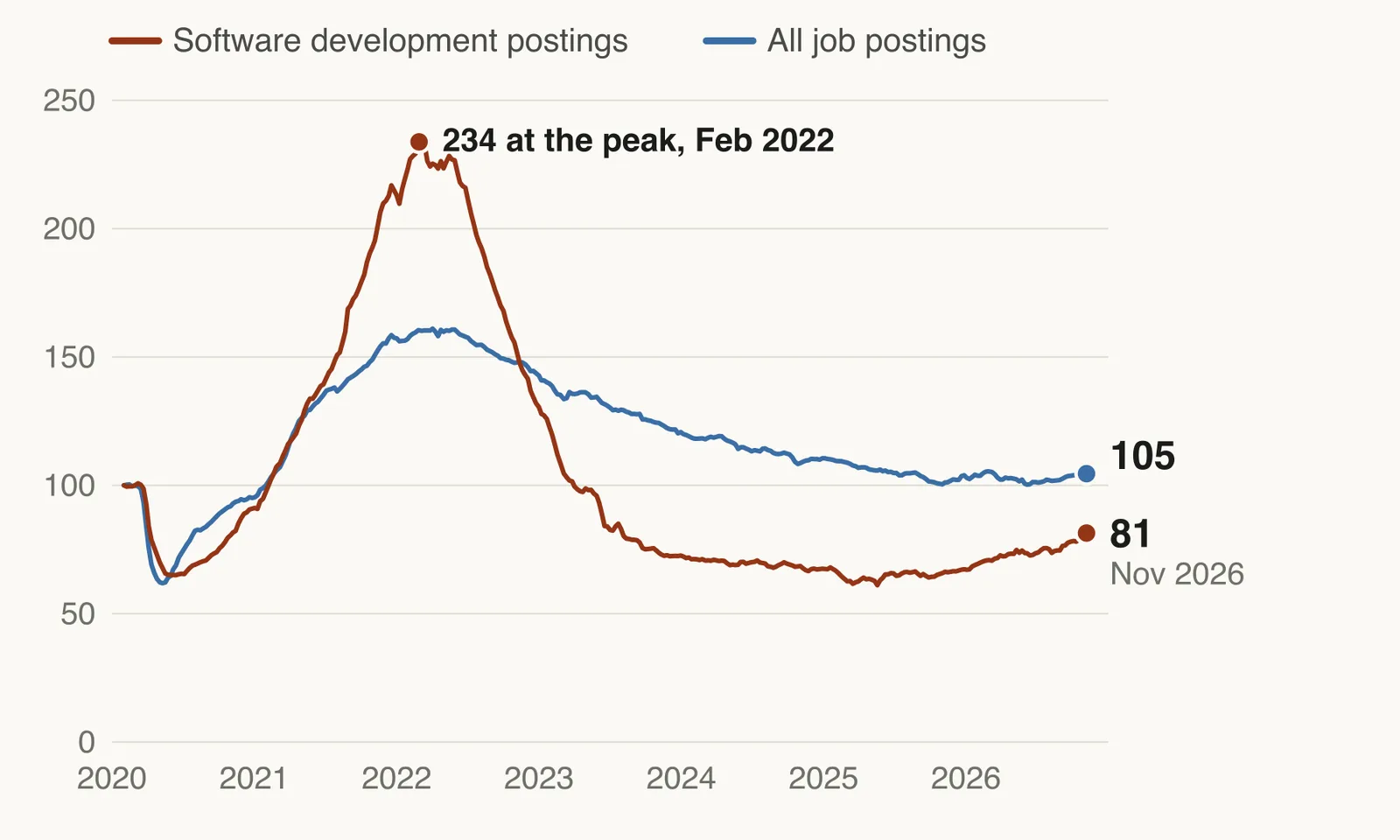
Job postings on Indeed, United States, February 2020 = 100. Source: Indeed Hiring Lab job postings tracker, data to 6 November 2026.
In short
Google's AI writes three quarters of its new code. Programmer jobs are projected to shrink. Software postings are still a fifth below 2020 while the rest of the job market is above it.
Count the Graduates
If you want to know whether advice worked, look at the people who took it.
The Federal Reserve Bank of New York tracks recent college graduates by major. In its 2024 data by major, computer engineering graduates had an unemployment rate of 7.8%, the second highest of 73 majors. Computer science was 7.0%, fourth highest. The figure for all majors was 4.2%. The two degrees we told a generation were bulletproof now sit next to fine arts and anthropology at the bottom of the table.
The damage is concentrated where you would expect: at the bottom rung. A Stanford study using payroll data found that employment of 22 to 25 year olds in the jobs most exposed to AI is 19% below where it would be had it kept pace with less exposed peers. The gap comes from less hiring, not from layoffs. Companies are not firing the juniors. They are just not hiring the next ones.
Students are already voting, and not quietly. This spring, undergraduate enrolment in computer science fell 8.4% at four-year colleges and 11.2% at two-year colleges, while undergraduate enrolment overall rose 1.3%. Last fall it fell at every level, down to a 14% drop in graduate programmes. Enrolment in short certificate programmes, the kind that lead to a trade, rose 10.2%. By spring 2025, two-year colleges with a vocational focus were up almost 20% from 2020.
Even the students who do sign up are less sure. Among bachelor's students who started in fall 2024, computer science had the lowest share still enrolled a year later of the ten most popular majors: 85%, against 93% in engineering.
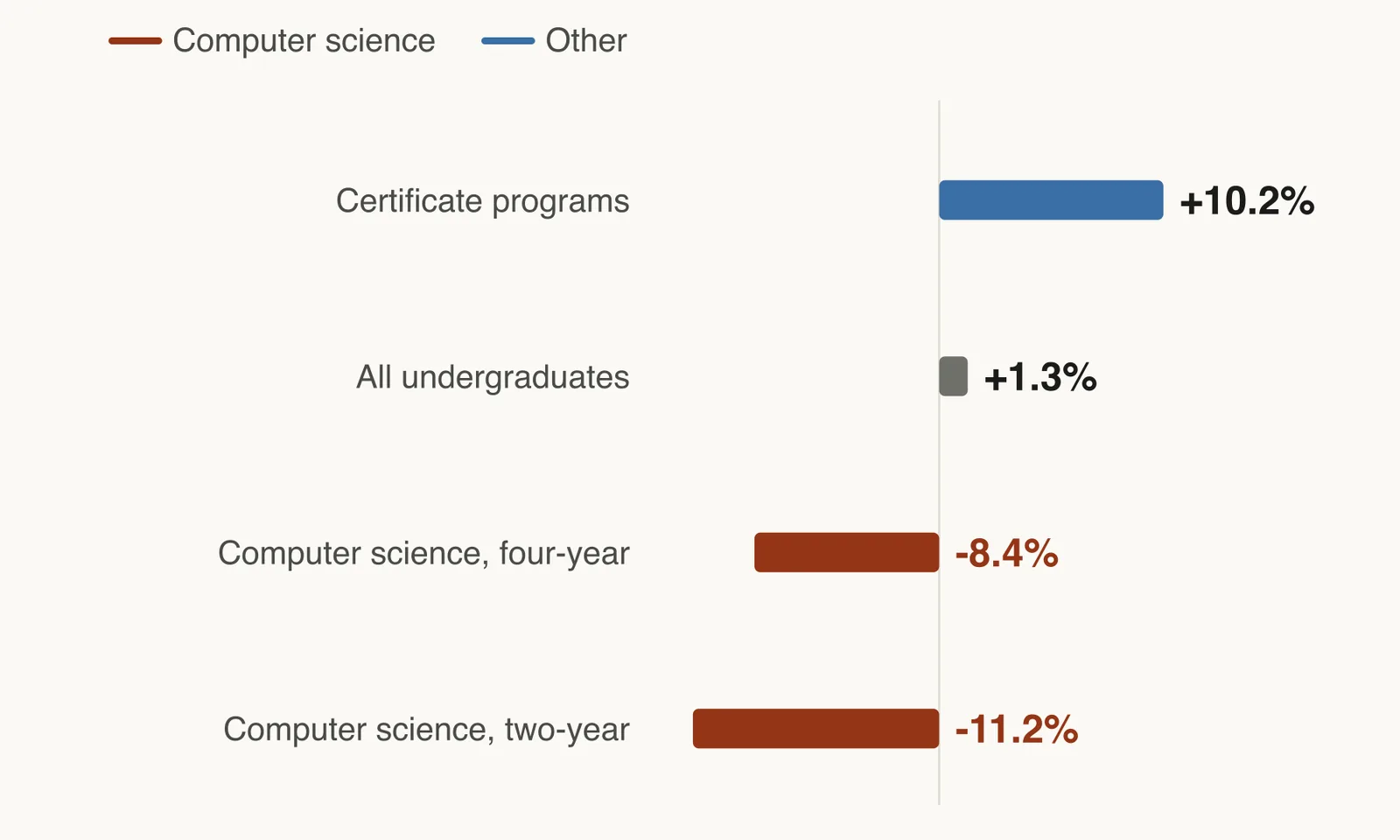
Change in enrolment, spring 2026 compared with spring 2025. Source: National Student Clearinghouse Research Center.
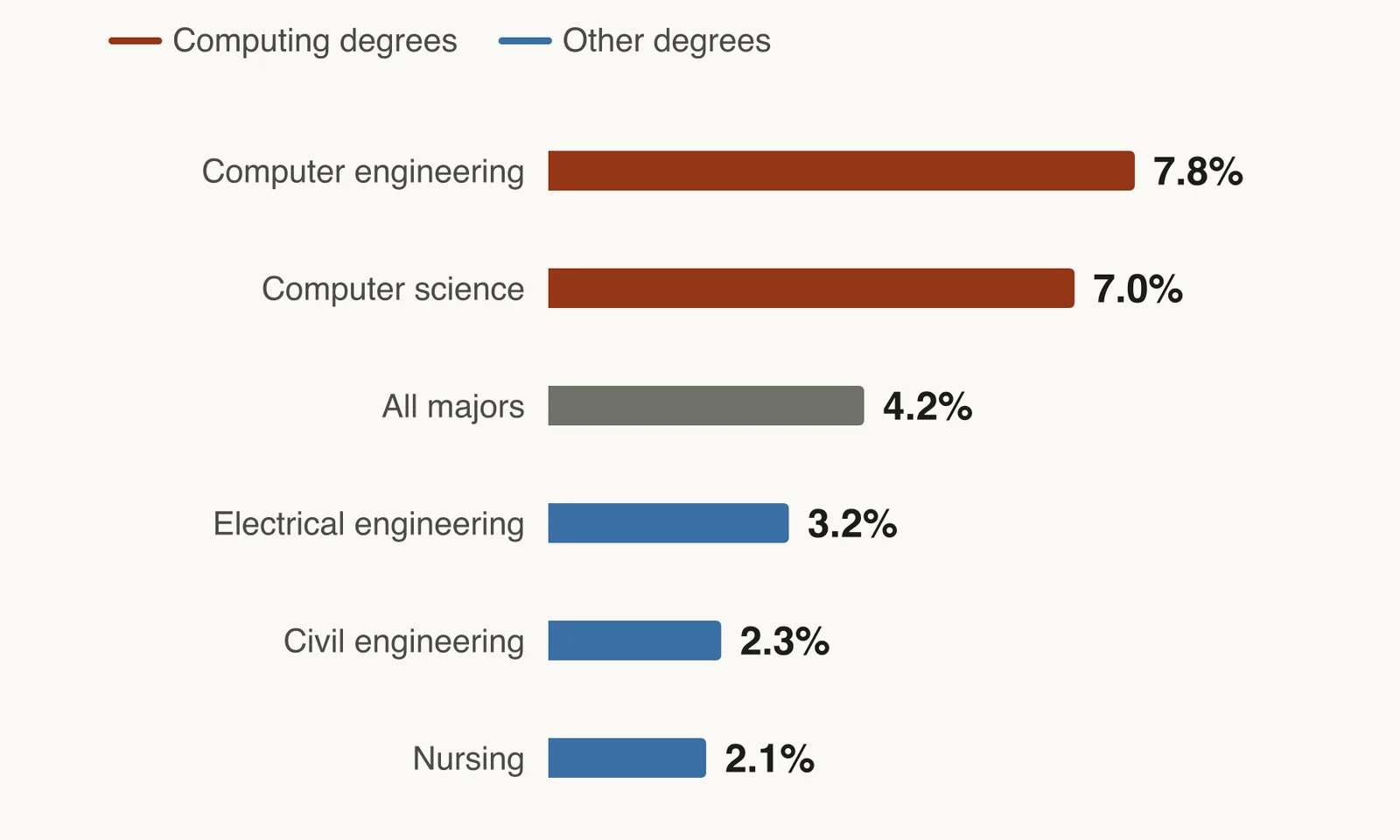
Unemployment rate of recent college graduates by major, 2024 data (latest by major, released February 2026). Source: Federal Reserve Bank of New York, The Labor Market for Recent College Graduates.
In short
Computer engineering and computer science graduates now have some of the highest unemployment of any major. The jobs that vanished were the entry-level ones, and students have started to notice.
Good to Know. But by How Much?
The obvious reply is: fine, not coding. Engineering, then. Something with hardware.
Here the numbers get more interesting, and more useful. Electrical engineering is doing well. The government projects electrical engineer jobs to grow 10% over the next decade, recent graduates have an unemployment rate of 3.2%, and the median engineer earns about $120,000.
What went away was the work of putting the things together. At the start of 2001 the United States had about 1.87 million jobs making computers and electronic products. Today it has about 1.01 million. Some of that went overseas and some went to machines. A single modern pick-and-place machine sets tens of thousands of components an hour onto circuit boards, every one exactly where the file says.
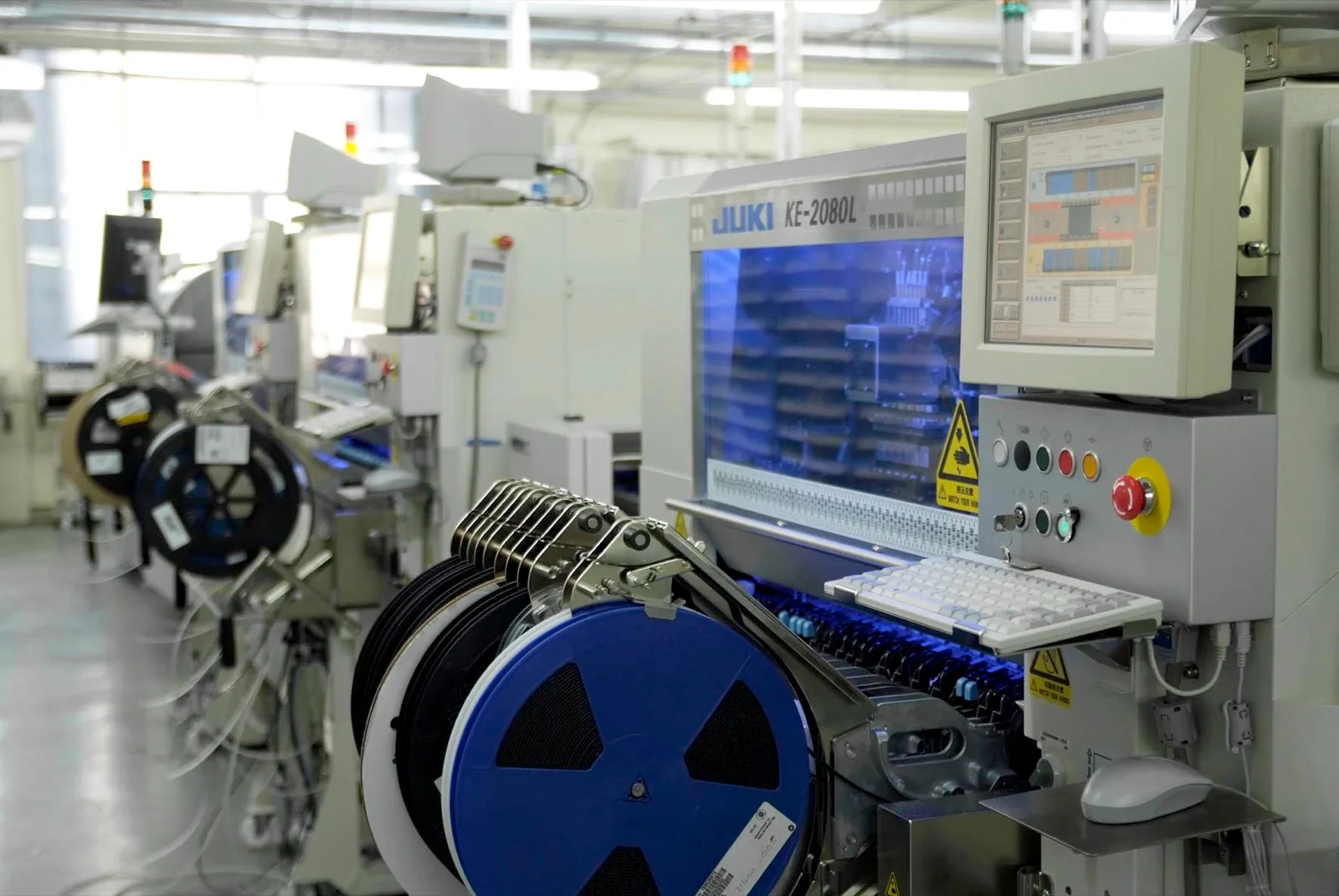
A pick-and-place machine on a circuit-board assembly line. Photo: Megger Ltd., CC BY 3.0.
So the honest answer to "is it still worth knowing how electronics and software work?" is yes. Knowing how it works is worth a lot. Betting a career on doing it by hand, at a bench or a keyboard, is worth less every year.
Here is a test any parent can use on any job: does the work happen somewhere a machine cannot easily go, on something that is different every time?
A circuit board is identical ten thousand times in a row. That is what machines are for. The wiring in a 1962 house is not identical to anything.
In short
Engineers who decide what gets built are fine. The routine work of building it, by hand or by keyboard, is what machines took. Ask whether a job happens somewhere messy, on something different every time.
What a Robot Can't Do
Researchers who build robots have a name for this. In the 1980s the roboticist Hans Moravec pointed out that it is comparatively easy to make a computer pass an intelligence test or play checkers, and very hard to give it the skills of a one-year-old when it comes to seeing and moving. It became known as Moravec's paradox, and forty years later it still holds.
Writing a web app is a puzzle with rules. Replacing a thermostat wire in an attic at 105 degrees, around a joist someone notched in 1987, next to insulation that was not supposed to be there, is not. Neither is diagnosing why a furnace short-cycles only on cold mornings, or tracing a parasitic drain on a car that someone else already half fixed.
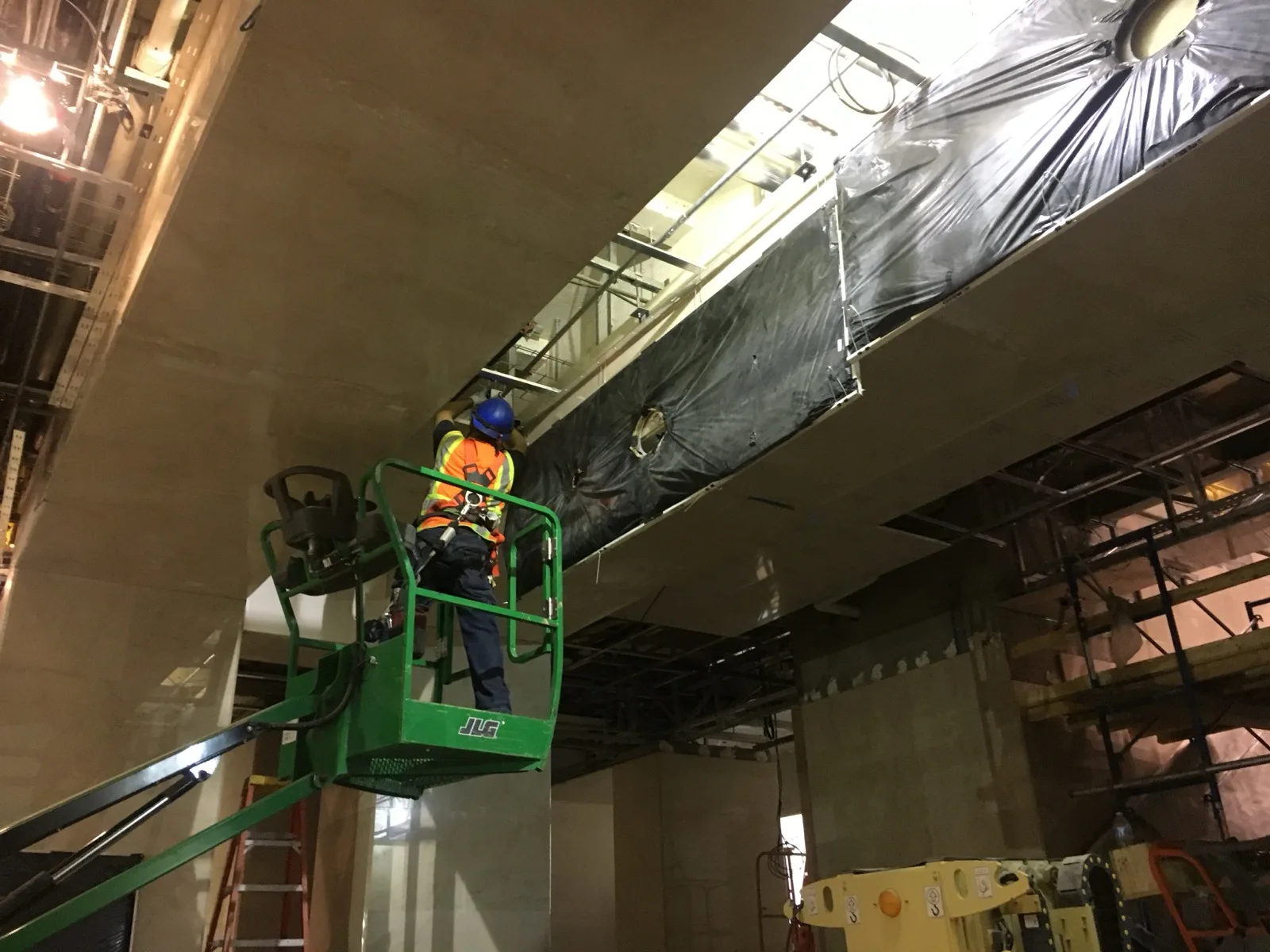
Electricians splicing pull boxes in an unfinished ceiling, New York, 2019. Photo: MTA Capital Construction, CC BY 2.0.
The machine that writes a website in a minute cannot climb a ladder, read a room or smell a burnt connection. Those jobs need hands and judgement in the same place at the same time.
In short
What is easy for people (moving, seeing, improvising in a messy space) is still hard for machines. The trades are built out of exactly that.
The Math of a Trade
Now put numbers on it. The Bureau of Labor Statistics projects, for 2025 to 2035:
- Electricians: up 9%, median pay $63,190, about 72,700 openings a year.
- HVAC technicians: up 11%, median pay $61,010.
- Plumbers (counted together with pipefitters and steamfitters): up 7%, median pay $63,800.
- Auto technicians: up 5%, median pay $50,620.
- Computer programmers: down 7%.
- All jobs: up 3.5%.
And there is the part parents rarely hear. An apprentice electrician is paid from the first day. One union program, for example, starts apprentices at 35% of the journeyman rate, $17.70 an hour against $50.58, and raises it as the hours and classes pile up over five years. There is no tuition bill at the end. Compare that with a bachelor's degree, where about half of graduates borrow and those who do leave owing about $29,560 on average.
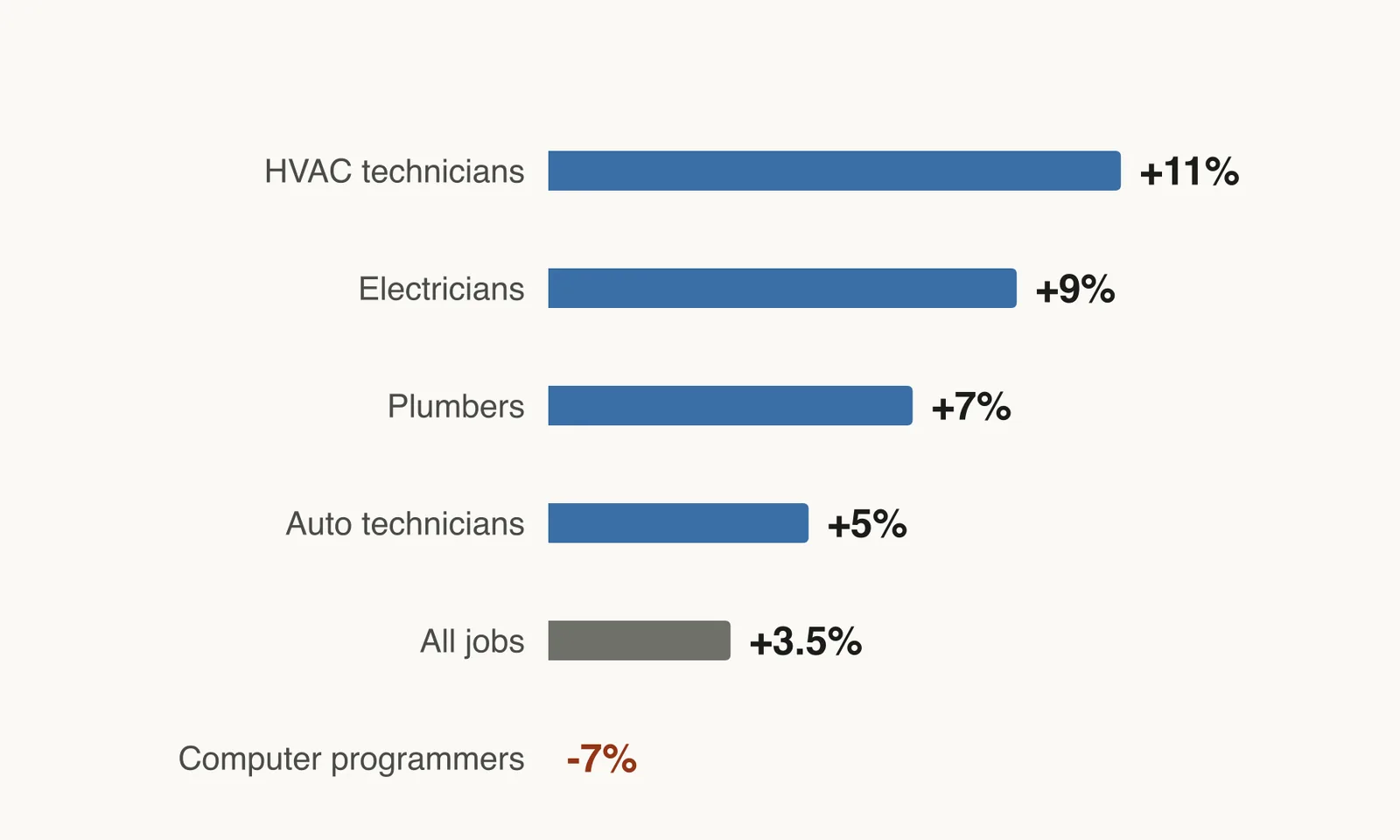
Projected change in employment, 2025 to 2035. Source: U.S. Bureau of Labor Statistics, Employment Projections.

Students in an electrical systems course practise pole climbing, Sheppard Air Force Base, Texas, 2015. Photo: U.S. Air Force / Danny Webb, public domain.
In short
Electricians and HVAC techs are projected to grow two to three times faster than the job market. Apprentices earn while they learn and finish without debt.
The Irony: AI Runs on Electricians
The technology eating the entry-level coding job needs an enormous amount of electricity. Someone has to wire the data centres, the substations and the cooling plants.
The Bureau of Labor Statistics names data centre demand in its outlook for electricians. Associated Builders and Contractors, the contractors' trade group, says data centre construction has made electricians capable of precision wiring hard to find, and that construction as a whole needs 349,000 more workers in 2026. Google has funded training for 100,000 electrical workers and 30,000 new apprentices.
The same company writing three quarters of its code with AI is paying to train electricians. That is not a coincidence. It is the whole argument in one sentence.
In short
The AI boom that is shrinking junior coding jobs is creating demand for electricians. The companies building AI are paying to train them.
What the Other Side Gets Right
This argument has limits, and you should know them before you repeat it at dinner.
Software still pays more. The median software developer earns $135,980. The bottom 10% of software developers, under $82,460, still out-earn the median electrician. The case for the trades is a safer bet and no debt, not a bigger paycheque.
Software is not dying. The government still projects software developer jobs to grow 10%, partly because of AI itself, and postings have recovered somewhat since early 2025, mostly for senior roles. Computer science graduates who do land jobs have some of the lowest underemployment and highest early-career pay of any major.
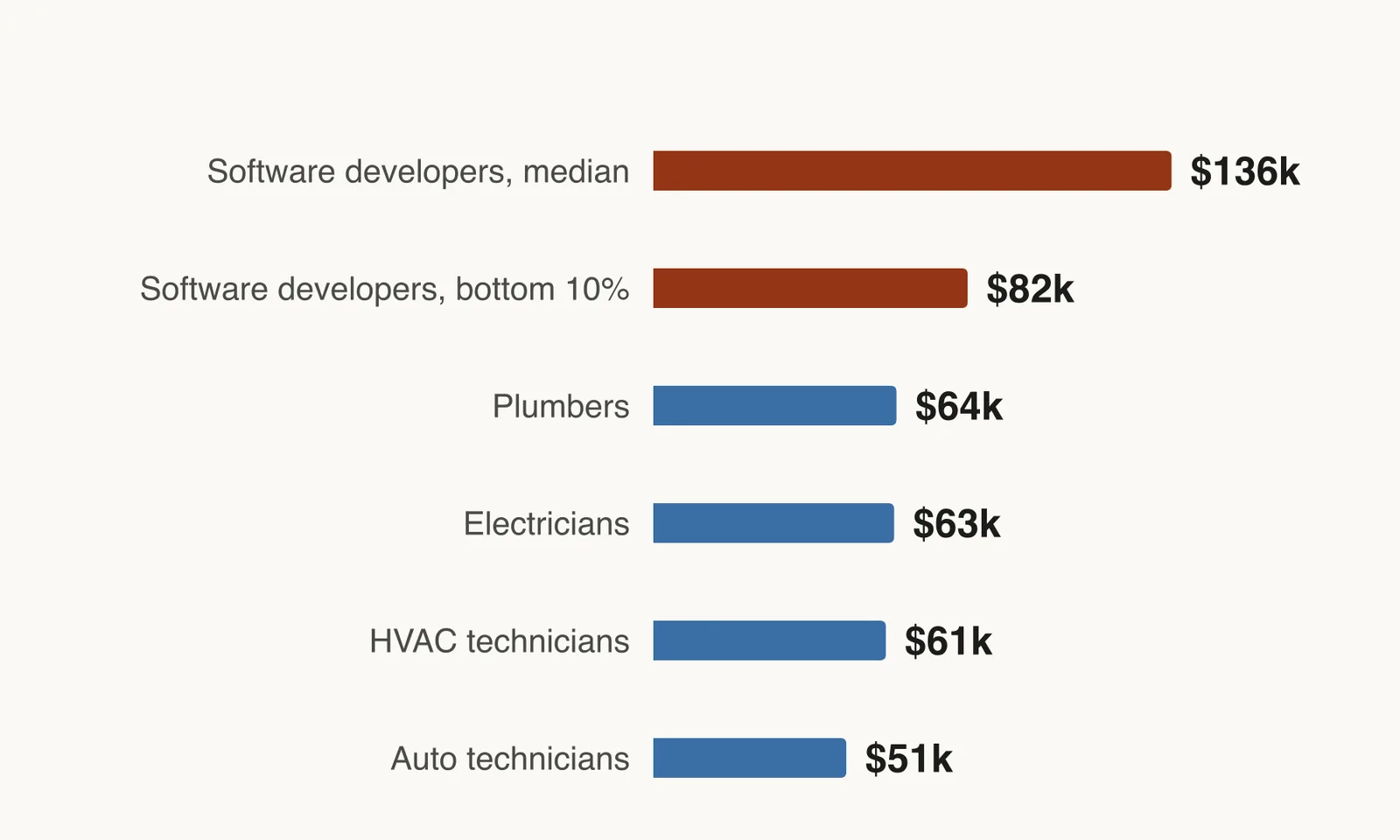
Median annual pay, May 2025. The bottom-10% bar is the pay that 90% of software developers earn more than. Source: U.S. Bureau of Labor Statistics, Occupational Outlook Handbook.
The trades are hard on the body. In 2024 electricians died on the job at a rate of 5.3 per 100,000 workers, auto technicians 6.3, HVAC technicians 6.7 and plumbers 6.9, against 3.3 for all workers. These are physical jobs, done in heat, cold and awkward spaces.
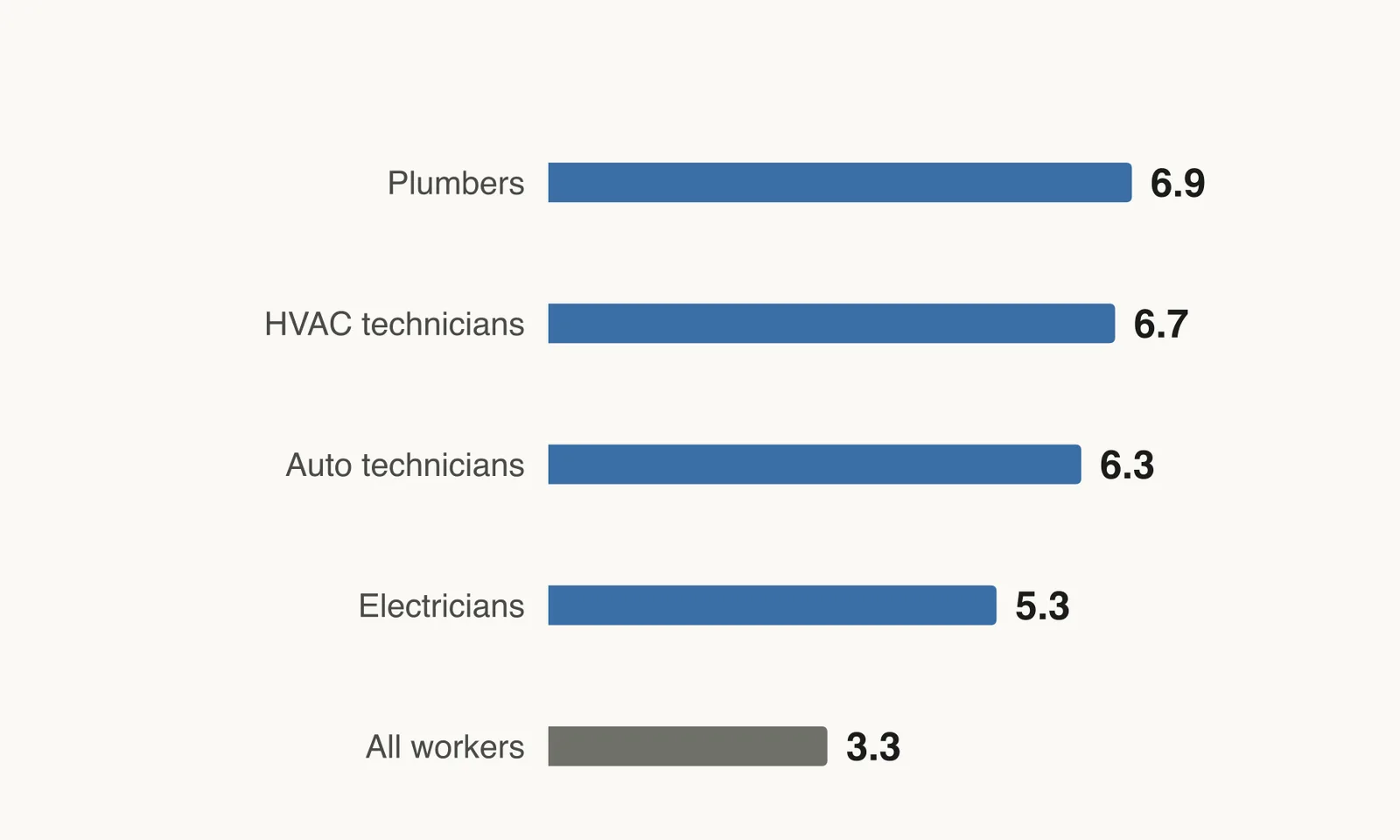
Fatal work injuries per 100,000 full-time-equivalent workers, 2024. Source: U.S. Bureau of Labor Statistics, Census of Fatal Occupational Injuries.
And the "everyone in the trades is retiring" story is a myth. The median electrician is about 40 years old, younger than the median American worker. The number of electricians aged 20 to 24 rose from about 104,000 in 2022 to about 146,000 in 2025. Young people are already moving in. A kid who starts now is not early. They are on time.
In short
Software pays more and is still growing at the top. Trades are physically riskier. And young people are already flooding into them, so this is not a secret.
What to Actually Tell a Kid
So what do you say?
Not "don't learn computers." Every electrician now commissions smart panels, every HVAC tech configures heat pumps from a phone, and every mechanic diagnoses a car through a laptop. Knowing how software works makes a tradesperson better.
What changes is the bet. Tell them the safest work is work that needs hands, judgement and a place a machine cannot reach. Tell them AI is a tool you use, not a race you try to win at a keyboard. Tell them that the electrician who runs the crew, the mechanic who can diagnose an electric car and the HVAC tech who installs heat pumps will be busy for a long time.
You were not wrong to sign them up for coding camp. Just don't stop there.
Sources
- AI share of new code at Google: Sundar Pichai, Q3 2024 earnings remarks, Alphabet Q3 2025 earnings call transcript (chief financial officer, "nearly half"), Cloud Next, April 2026.
- Job projections, pay and openings, 2025 to 2035: U.S. Bureau of Labor Statistics, Occupational Outlook Handbook: computer programmers, software developers, electricians, HVAC, plumbers, automotive technicians, electrical engineers; employment by occupation.
- Software job postings: Indeed Hiring Lab job postings tracker, February 2020 = 100.
- Recent graduates by major: Federal Reserve Bank of New York, The Labor Market for Recent College Graduates.
- Young workers in AI-exposed jobs: Brynjolfsson, Chandar and Chen, Canaries in the Coal Mine, Stanford Digital Economy Lab.
- Enrolment: National Student Clearinghouse, spring 2026 enrolment, computer science enrolment, vocational two-year colleges.
- Electronics manufacturing jobs: BLS Current Employment Statistics via FRED, CES3133400001.
- Apprentice pay example: Southern Nevada inside wireman apprenticeship notice.
- Student debt: College Board, Trends in College Pricing and Student Aid 2025.
- Construction workforce and data centres: Associated Builders and Contractors, January 2026; Google.org electrical workforce training.
- Fatal injury rates, 2024: BLS Census of Fatal Occupational Injuries.
- Age of workers by occupation: BLS Current Population Survey, table 11b and 2022 edition.
- Hour of AI: Code.org; THE Journal, 2 October 2025.
- Photos: ENIAC programmers (U.S. Army, public domain); pick-and-place machine (Megger Ltd., CC BY 3.0); electricians in a ceiling (MTA Capital Construction, CC BY 2.0); pole-climbing trainees (U.S. Air Force, public domain).
- Moravec's paradox: Hans Moravec, Mind Children (Harvard University Press, 1988).