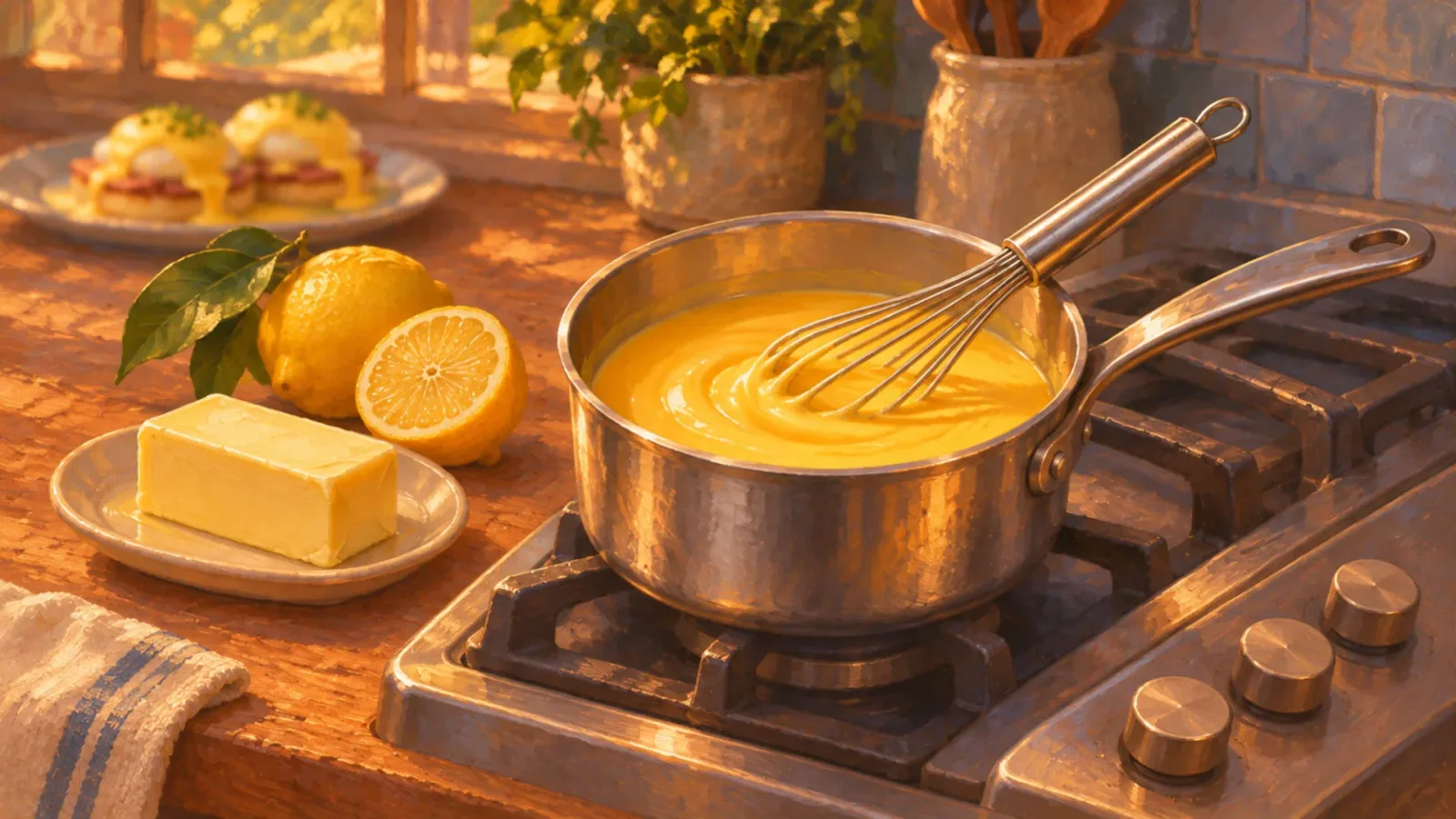
The scariest sauce in French cooking is butter, egg yolk and lemon.
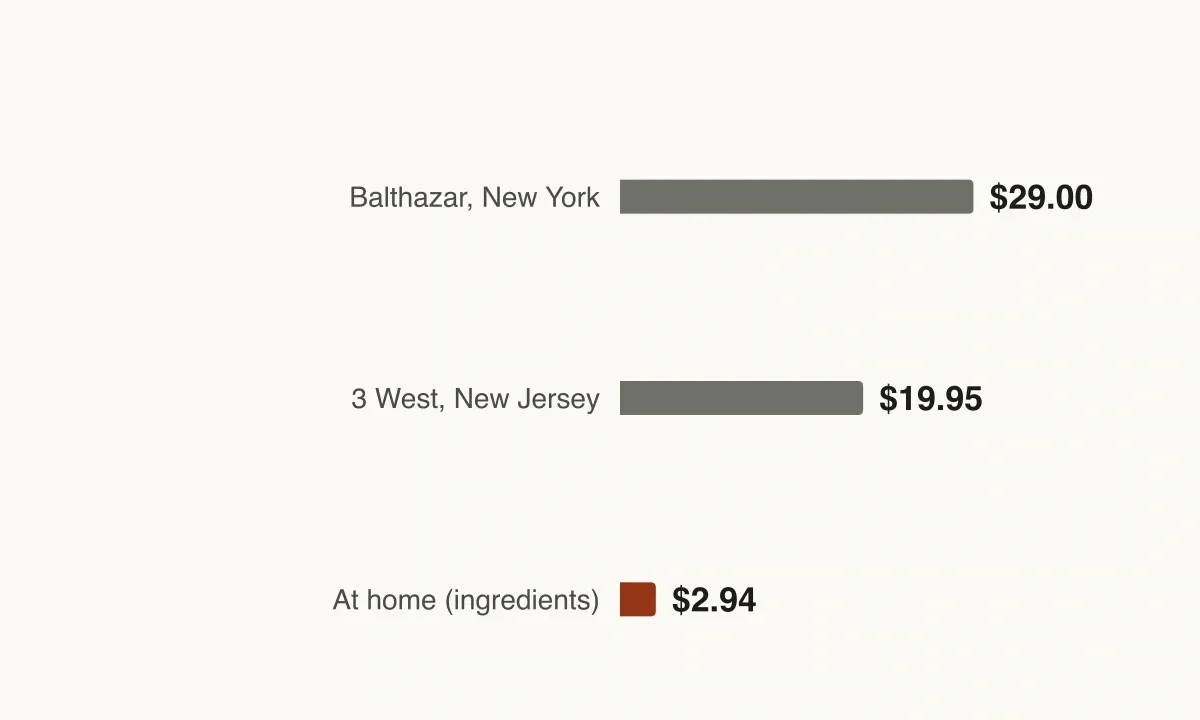
A New York brunch room lists eggs Benedict at $29.00. A New Jersey restaurant lists it at $19.95. The same plate at home, with ordinary supermarket eggs, English muffins and Canadian bacon, comes to roughly $2.94 in ingredients.
What scares people off is the hollandaise. It sounds like a test you fail in front of guests. It is about ten minutes of whisking.
In the restaurant bill math, most of what you pay for a meal out is labor, rent and overhead, not food. This is the other half of that story: the food part is mostly sauce, and sauce is a skill you learn once.
Five Sauces Run Most of the Menu
French cooking organizes its sauces into five "mother" sauces. The framework is tied to the chef Auguste Escoffier, who refined an older classification. Learn the five and most restaurant dishes stop looking like magic.
- Tomato. Tomatoes cooked down with aromatics. It becomes pasta sauce, pizza sauce and the base for half the dishes on an Italian menu.
- Béchamel. Milk thickened with butter and flour. Add cheese and it is the sauce in mac and cheese and lasagna.
- Velouté. Stock thickened the same way. At home that is gravy: smothered pork chops, chicken pot pie, biscuits and gravy.
- Espagnole. A brown sauce from brown stock. Reduced further it becomes the base of steakhouse sauces like bordelaise.
- Hollandaise. Butter whisked into egg yolk and lemon. Eggs Benedict, asparagus, and béarnaise on a steak.
Three of the five share one move: melt butter, stir in the same weight of flour, then whisk in a liquid. Milk gives you béchamel. Stock gives you velouté and gravy. That is one technique, not three recipes.
Most of Them Take Minutes, Not an Afternoon
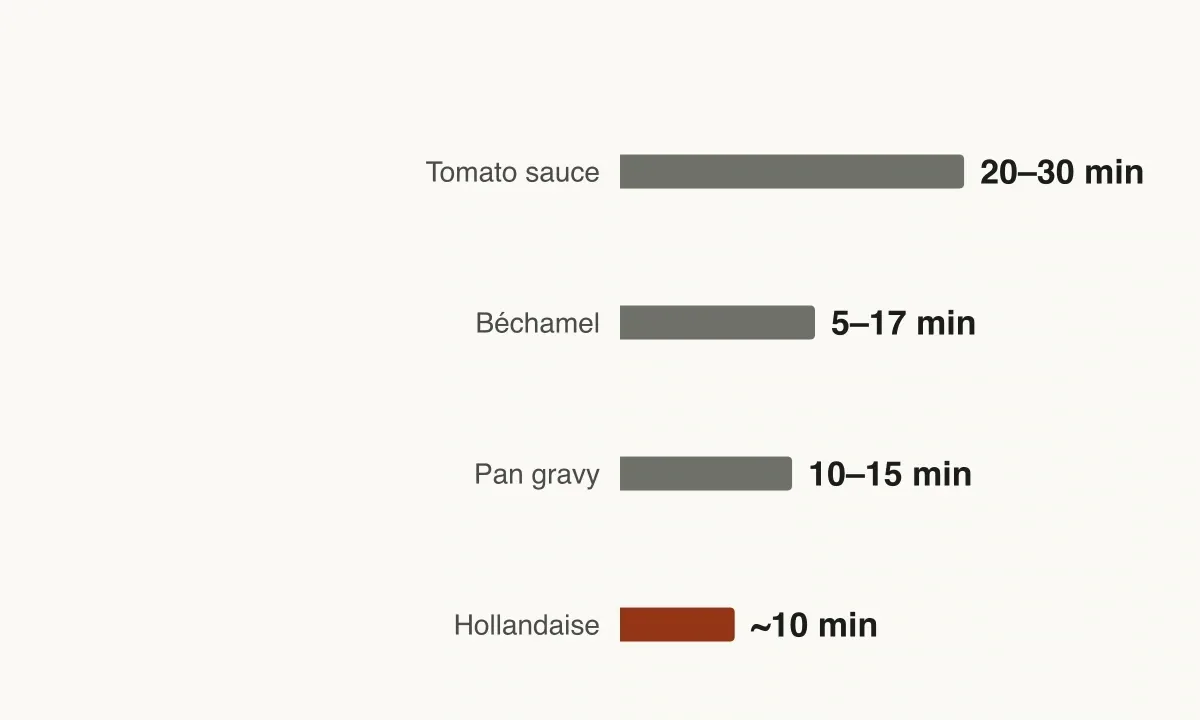
Published recipes put simple versions in this range:
- Quick tomato sauce: about 20 to 30 minutes from start to finish, most of it simmering.
- Béchamel: about 5 to 17 minutes, depending on the batch.
- Pan gravy: about 10 to 15 minutes, once you have the drippings or stock.
- Hollandaise: about 10 minutes of attended whisking.
These are recipe estimates, not stopwatch promises. Your first try will be slower. The honest exception is a classic espagnole. A culinary school version takes about two hours even with stock already made. That one is a weekend project, or a reason to keep gravy as your weeknight brown sauce.
Hollandaise, the Sauce Everyone Is Afraid Of
Here is the whole thing. A home recipe for two uses about 125 grams of butter (a little more than a stick), two egg yolks and half a teaspoon of white-wine vinegar, plus a squeeze of lemon.
- Melt the butter.
- Whisk the yolks, vinegar and a spoonful of water in a bowl over barely simmering water until they thicken, about three to five minutes.
- Take the bowl off the heat and pour in the warm butter slowly while you keep whisking.
- Finish with lemon and salt.
That is it. Restaurants make it in bigger batches, but the ratio is the same idea: a lot of butter held together by a little yolk.
If it breaks, whisk in a little water first. If it is still broken, whisk a fresh yolk over the heat until it thickens, then slowly whisk the broken sauce into it. If it got too hot, take it off the heat, whisk in a little cool water and strain it.
Use pasteurized eggs. Hollandaise is never fully cooked, and neither is a runny poached egg. The FDA recommends pasteurized eggs or egg products for sauces like this. If you are feeding someone pregnant, elderly or with a weak immune system, cook the eggs firm or skip this one.
The Money
Prices change by store and city. These are listed prices checked on November 16, 2026, with the math shown.
Eggs Benedict. About $2.94 per plate at home with ordinary eggs, against $19.95 and $29.00 on two restaurant menus. Pasteurized eggs cost more; we did not have a reliable price for them, so that figure is a floor, not a promise.
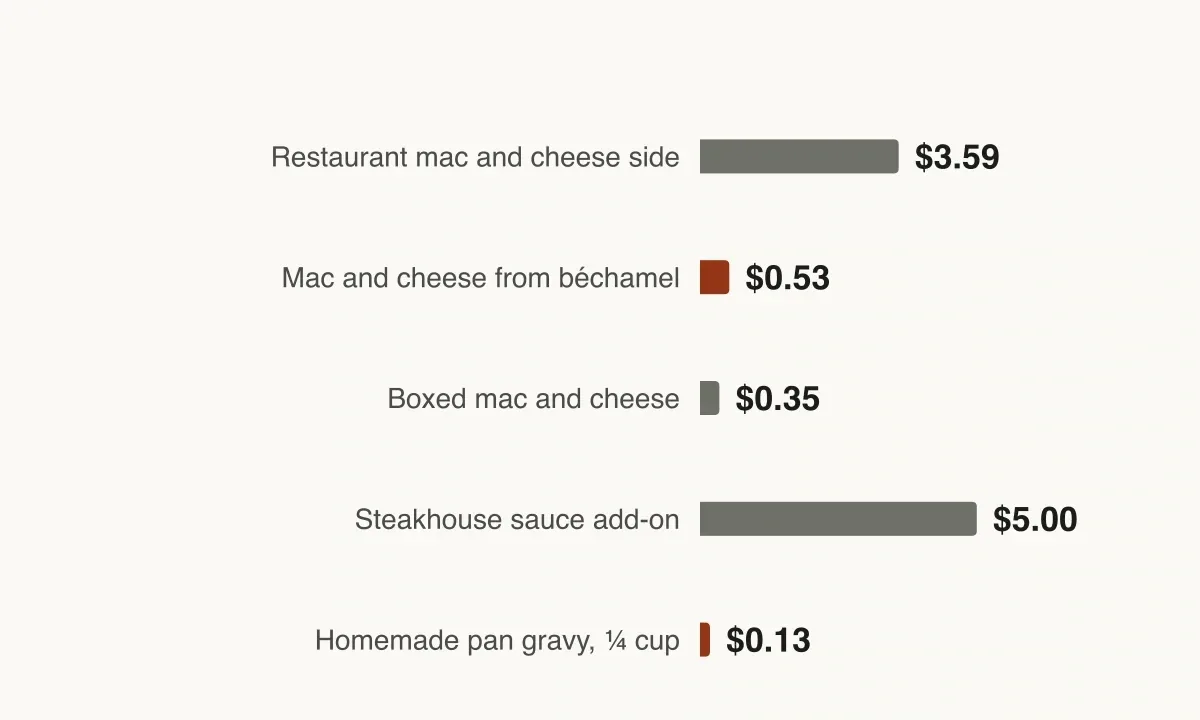
Mac and cheese from béchamel. About $0.53 per side portion made from scratch, against $3.59 for a side at a barbecue chain. The boxed kind is cheaper still at about $0.35. Homemade is not the cheapest option; it is the best one per dollar.
Pasta with tomato sauce. About $1.86 a plate with homemade sauce, or about $1.07 with a mid-priced jar, against $13.99 for a build-your-own pasta at a national Italian chain. The restaurant includes breadsticks and soup or salad, and the portion sizes are not the same. But the gap is not close.
Steak sauce. A quarter cup of homemade pan gravy costs about $0.13. One steakhouse lists its bordelaise and Diane sauces at $5 each.
None of this counts your time or the gas for the stove. A night out costs time too: getting there, waiting for a table, waiting for the check.
How I Keep It Low Work
The point is not to cook every night like a chef. It is to make the hard part once.
Batch it and freeze it. Make a big pot of tomato sauce on the weekend. For scale: one published soup recipe takes about 30 minutes of active work for six servings, and a frozen curry in a batch-cooking guide reheats in a pan in about ten minutes. Reheat leftovers until they are steaming hot, 165°F. Homemade tomato sauce keeps well in the freezer for about two months; a mac and cheese casserole, about three. Milk sauces on their own can separate when frozen, so freeze a small test portion before you commit a big batch.
Use one pan. Gravy is made in the pan the meat came out of. The browned bits are the flavor. No extra pot, no extra dishes.
Keep the staples. Canned tomatoes, butter, flour, milk and stock cover four of the five sauces. With those in the house, dinner does not start with a trip to the store.
Cool it fast. Refrigerate leftovers within two hours (one hour on a hot day), in shallow containers, and use them within three to four days. Freezing keeps food safe; it does not make unsafe food safe.
You Are Not Bad at Cooking. You Are Tired.
Most Americans already cook. In a February 2026 YouGov survey, 76% of US adult citizens said they cook at least a few times a week. When an Instacart-commissioned survey asked what stops people cooking more, the top answers were lack of time (20%) and exhaustion after work (19%). Lack of skill was 7%.
So the problem is not talent. It is that a cold weeknight makes the delivery app easier than the stove. Five sauces in the freezer change that math.
Learn Five Things Once
You do not need a hundred recipes. You need tomato sauce, a white sauce, a gravy, a brown sauce for the weekend, and the ten minutes of whisking that makes eggs Benedict.
Learn those once and the menu stops being a mystery. The $29 brunch is still there when you want the room, the coffee and someone else doing the dishes. Just stop paying for it because you think the sauce is hard.
Sources
- Escoffier School of Culinary Arts: the five mother sauces and their daughter sauces
- Recipe timing: VA Nutrition and Food Services tomato marinara; David Rocco tomato sauce; Serious Eats béchamel; BBC Good Food white sauce; Inspired Taste gravy
- Hollandaise: BBC Good Food recipe; Culinary Institute of America, Examining Sauces
- Egg safety: FDA, eggs in menu items made from raw shell eggs; FDA, egg safety at home; USDA FSIS, egg products in uncooked recipes
- Restaurant menus, checked November 16, 2026: Balthazar brunch; 3 West brunch; MISSION BBQ; Olive Garden; Silk's Steakhouse
- Ingredient prices: Walmart listings checked November 16, 2026 (crushed tomatoes, olive oil, onion, garlic, basil, salt, marinara jar, pasta, butter, milk, flour, Cheddar, boxed mac and cheese, eggs, English muffins, Canadian bacon, broth)
- Batch cooking: EatingWell, Favorite Chili, Soup & Stew Recipes; BBC Good Food batch cooking
- Food storage: FoodSafety.gov, four steps; FoodSafety.gov cold storage chart; USDA FSIS leftovers; University of Missouri Extension freezing guide; National Center for Home Food Preservation; NYC Health + Hospitals tomato sauce
- Surveys: YouGov, February 2026; Instacart cooking-at-home survey, November 2025